






- Most often seen April through September, and especially during the warmest months.
- Found basking on logs, rocks, shorelines, and in shallow water.
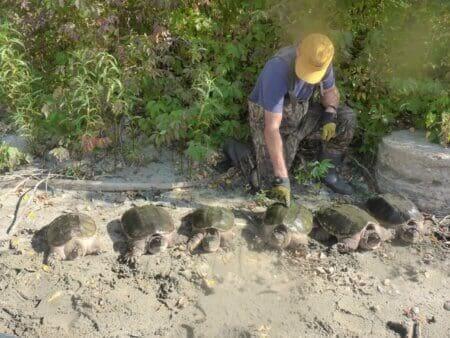
- Adults leave the water when they move between winter and summer habitats, and to lay eggs in a nest.
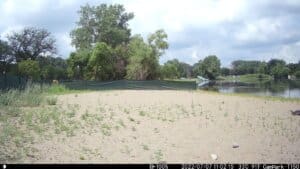
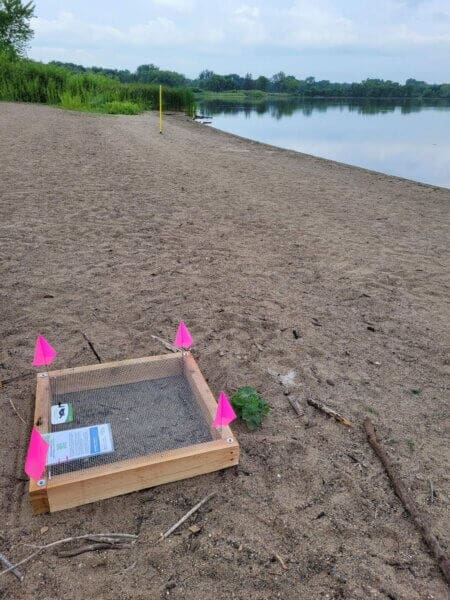
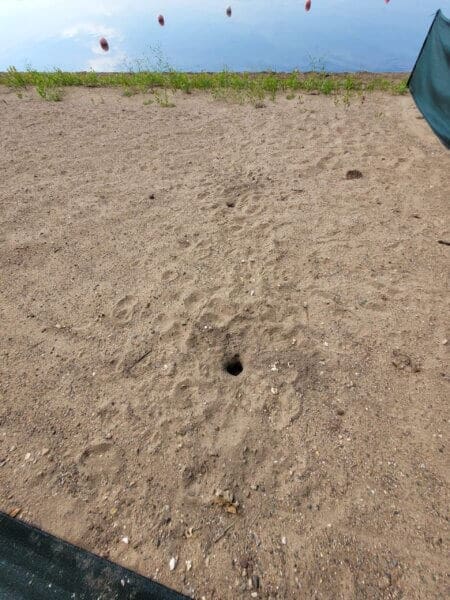
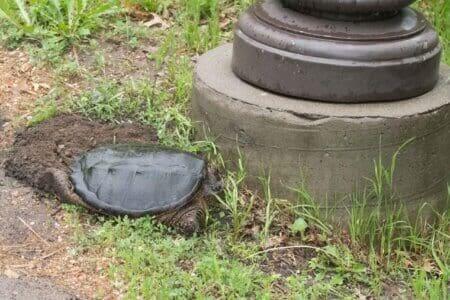
- Nesting begins in the middle of May (can be earlier – weather dependent). Turtles are often seen at this time laying eggs in sandy shoreline areas or moving across roadways to access preferred locations.
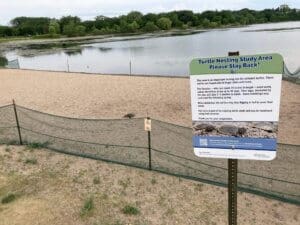
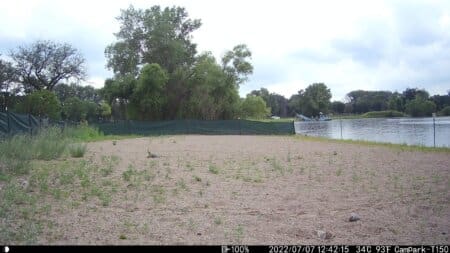
- Shoreline nesting refuges can provide an opportunity for viewing nesting soft shell turtles. There are currently refuges at Lake Harriet Main Beach and Bde Maka Ska Thomas Beach.
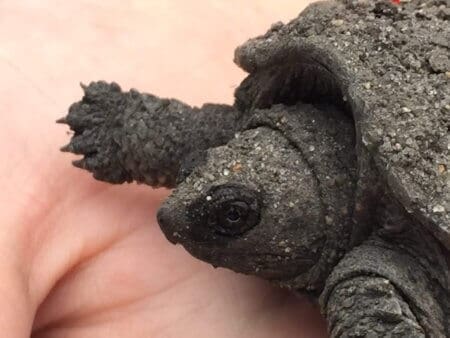
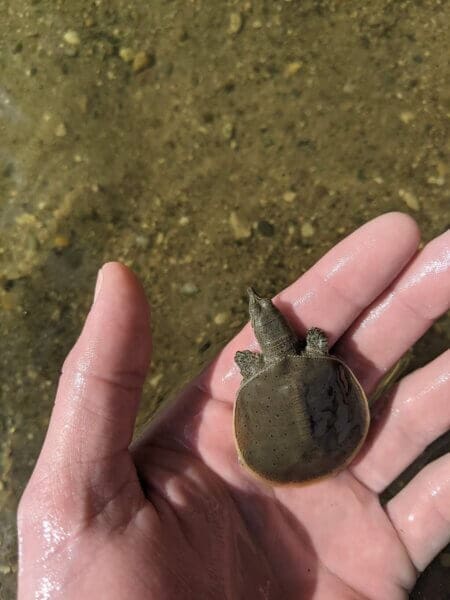
- Baby turtles (hatchlings) head to water 2-3 months after eggs are laid or in spring, after staying in the nest all winter.
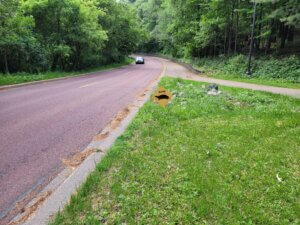
- In roads – Turtles are especially vulnerable when found on land and crossing roads.
Turtles live in water AND on land. Both types of habitats and the connections between them are critical to turtles’ survival. Turtles lay eggs in nests on land and females are often seen in spring, when they head to where they were born to lay their eggs. Most turtles nest within a half mile of water and will cross dangerous obstacles such as roads, biking and walking paths to get where they want to be.
With few exceptions, Minneapolis’ turtles overwinter in mud at the bottom of water that is deep enough not to freeze solid. This means that in fall turtles often walk across land and roads as they move to safe wintering spots.
Cars kill turtles. Vehicle collisions are the major cause of death for turtles, especially females who are killed in roads on their way to nest. Few hatchlings survive to adulthood, and it takes about a decade for them to mature. Losing adult turtles, especially reproducing females, can seriously impact turtle populations.
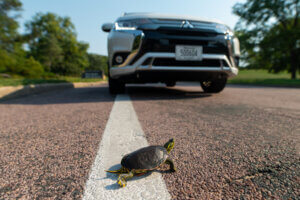
Caution: Turtles crossing!